North View
Permanent Supportive Housing in Port Angeles
A place to call home. A foundation for recovery.
North View is Peninsula Behavioral Health’s 36-unit Permanent Supportive Housing community located at 138 W. 2nd Street, Port Angeles, WA. Designed for adults living with serious behavioral health needs who are experiencing homelessness or housing instability, North View combines affordable housing with access to supportive behavioral health services that promote recovery, independence, and long-term housing stability.
Opened in 2026, North View reflects Peninsula Behavioral Health’s commitment to expanding housing opportunities and improving the health and well-being of our community.

What is Permanent Supportive Housing?
Permanent Supportive Housing (PSH) combines affordable housing with access to supportive services that help individuals maintain stable housing, improve health outcomes, and build greater independence.
At North View, applicants must be actively engaged in behavioral health treatment to be eligible for admission. The goal is to help residents achieve stability, strengthen recovery, and ultimately graduate from behavioral health services while maintaining successful independent housing.
North View provides a recovery-oriented living environment where residents can build the skills and confidence needed for long-term success.
Who May Be Eligible?
North View serves adults who:
- Live with a serious behavioral health need
- Are experiencing homelessness or housing instability
- Are actively engaged in behavioral health treatment with a provider or care team
- Meet applicable income eligibility requirements
- Meet program admission and screening criteria
Applicants may receive services through Peninsula Behavioral Health or another qualified behavioral health provider.
How Do I Apply?
Individuals cannot self-refer.
If you believe North View may be an appropriate housing option, please speak with your behavioral health treatment provider or care coordinator. Providers assist eligible individuals through the referral and application process.
Housing opportunities are filled through a randomized lottery rather than on a first-come, first-served basis.
A Continuum of Housing
North View is part of Peninsula Behavioral Health’s growing housing continuum designed to meet people where they are in their recovery journey.
PBH also owns and operates:
- Dawn View Court, a 26-unit Permanent Supportive Housing community that opened in 2023.
- Six Transitional Supportive Housing homes that provide structured, short-term housing and supportive services for individuals working toward permanent housing and greater independence.
Together, these programs help individuals move from homelessness toward stability, recovery, and long-term success.
Building a Stronger Community
North View represents a collaborative investment in the future of Clallam County. The approximately $12 million development was made possible through the generous support of:
$6,019,463 State Housing Trust Fund
$2,000,000 Behavioral Health Advisory (1/10th of 1% sales tax RCW 82.14.457)
$2,000,000 Clallam County 1590 and 1406 funds
$750,000 Shreffler Family Donation
$740,000 City of Port Angeles 1590 funds
$720,000 Trueblood Capital (Seattle Foundation)
$250,000 Olympic Community of Health
$200,000 Americas Foundation
$36,500 Enterprise
$36,136 Community Capital Campaign
$25,000 First Fed Foundation
$5,000 Kitsap Bank Community Connections
$5,000 Public Plaza, LLLC
Apartment Community
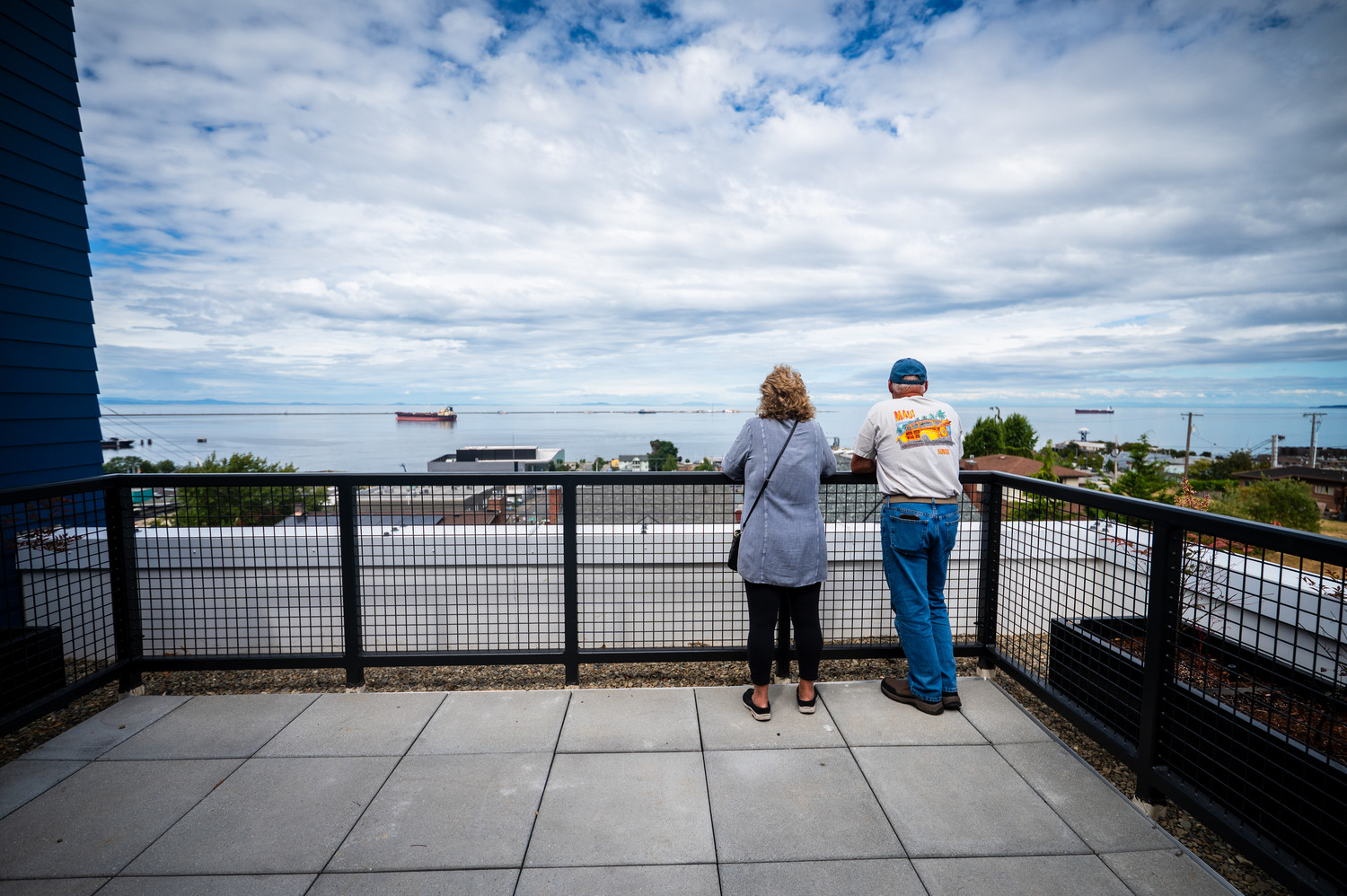
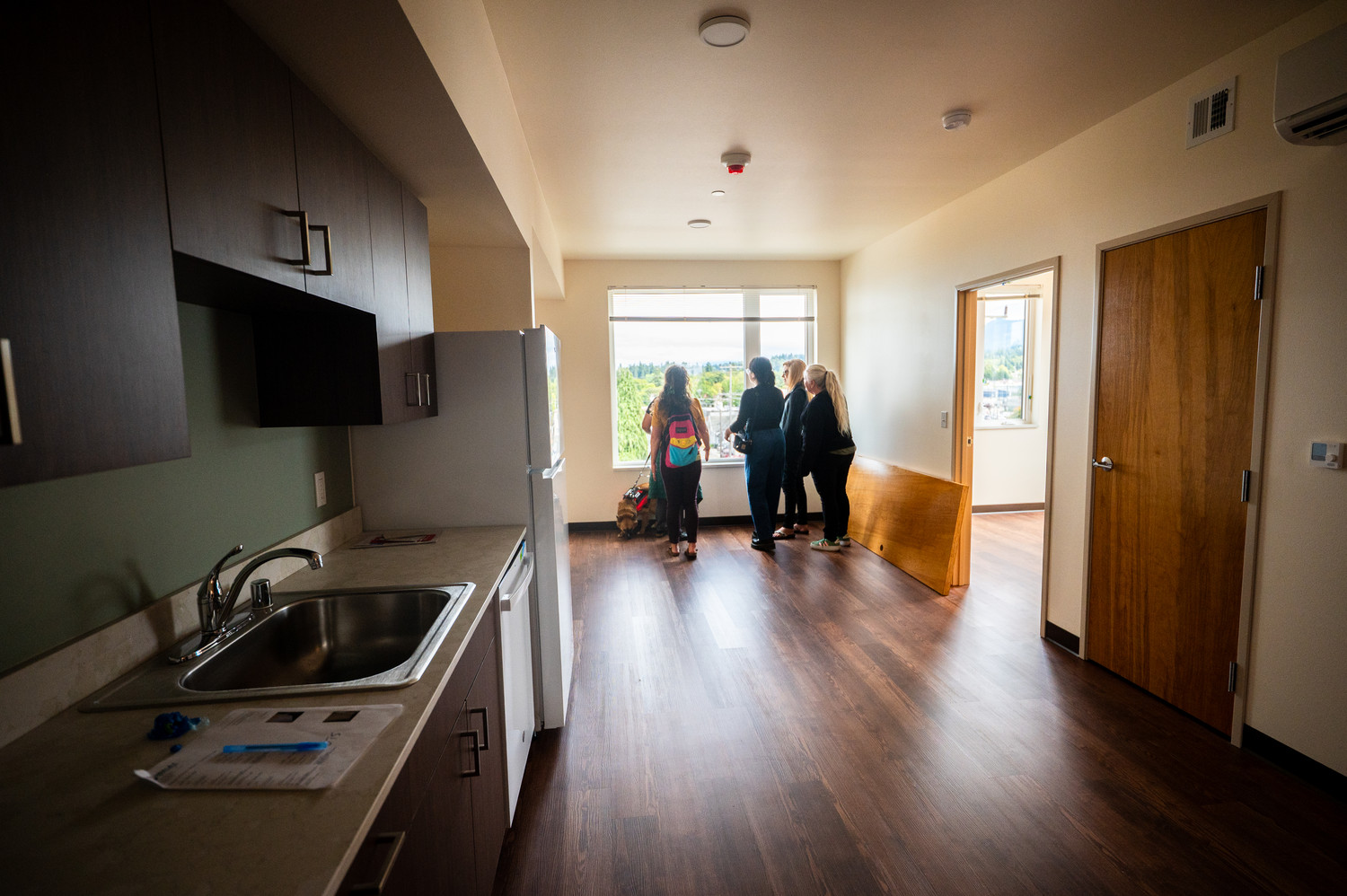
North View features 36 affordable apartments including:
- 7 Studio apartments (413 sq. ft.)
- 25 One-bedroom apartments (502 sq. ft.)
- 4 Two-bedroom apartments (783 sq. ft.)
The four-story community also includes:
- Community room
- On-site property management
- Central laundry facilities
- Utilities, including broadband internet
- Modern, energy-efficient and durable construction
North View was intentionally designed to be pet friendly, recognizing that companion animals are often an important source of comfort and stability and that access to pet-friendly housing can reduce barriers to ending homelessness.

